
Marion County Arrest Records and Court Charges
Marion County arrest records can reflect the law-enforcement and booking event: the arresting agency, booking number, booked date, arrest date, release date, charges or holds listed in jail systems, and custody status when the person is in jail. Those records are not the same as the court charge record. The court charge record begins when the Marion County Prosecutor's Office files a complaint, information, indictment, or other charging document in court.
The court charge record is tracked through MyCase and the Marion County Clerk's criminal record channels. It may show offense statute, offense degree, original offense degree, charge modification, citation number, offense date, bond, hearings, disposition, and sentence. The full criminal case file and outcome belong in Marion County criminal court records, while jail roster and booking details belong with inmate records.
Find Marion County Arrest Records and Charges
There is no single official source in the research that combines every arrest record and every court charge after arrest. The practical path is to separate the search. Use the Marion County Sheriff's Office or jail tools for custody and booking information. Use MyCase for the filed court charges. Use the Clerk's criminal records request channels when a certified document, charging instrument, judgment, or order is needed.
- Search custody or sheriff channels when the question is whether a person was booked or is still in jail.
- Search MyCase by name or cause number to see whether formal charges were filed in Marion County court.
- Open the case and review charge codes, offense degree, charge modification, bond, hearing, and disposition fields.
- Use the Clerk's criminal case record request form or online portal for documents not shown online.
- Contact the prosecutor, defense counsel, or court only for role-specific questions that a public record cannot answer.
The Marion County Sheriff's Office information-request page is the official public-records channel for sheriff records questions.
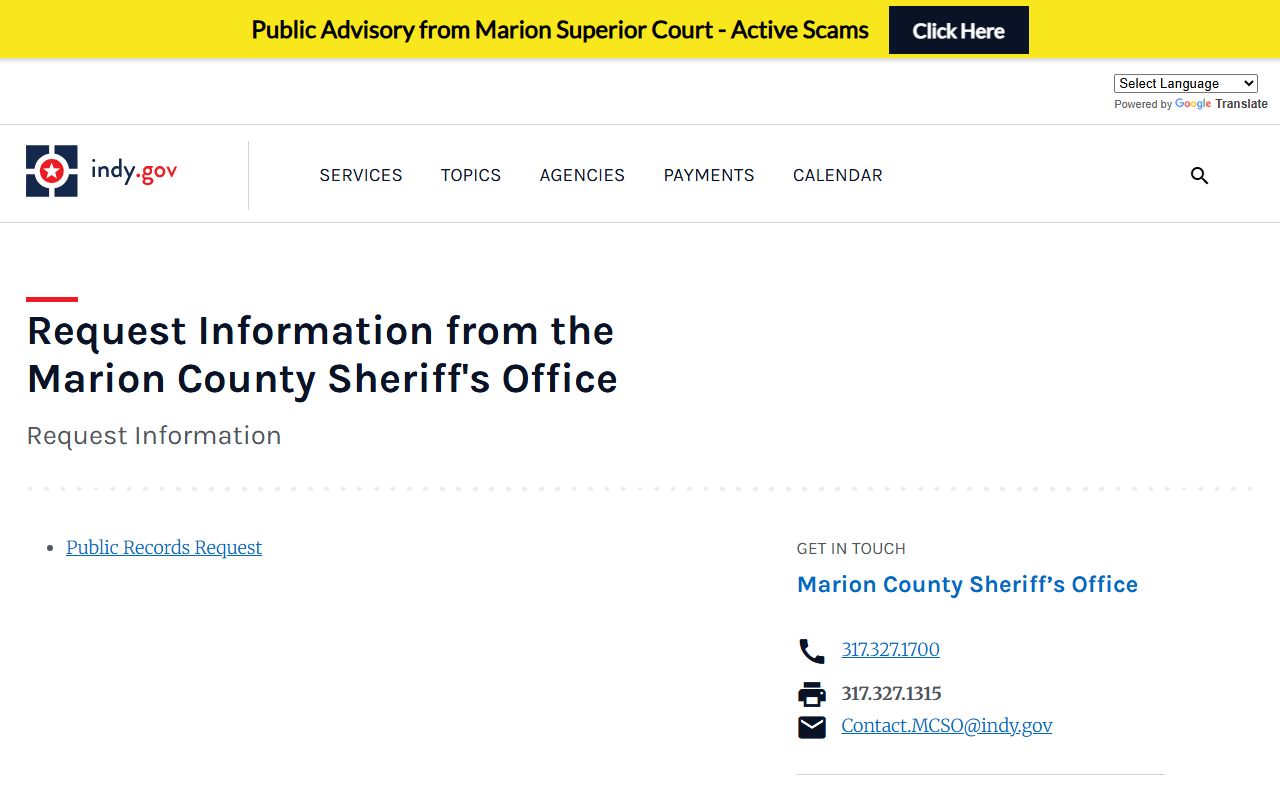
That request path serves the sheriff side of an arrest, while formal charges are checked through court records.
Charges After Arrest Documents
After an arrest, the prosecutor decides what court charges to file. A jail entry may list an arrest allegation or hold, but the prosecutor's filing is the charge that starts or shapes the court case. Marion County research names the Prosecutor's Office as the office that decides charges after arrest, while the Clerk maintains the resulting criminal case record.
| Document | Who Uses It | What It Does |
|---|---|---|
| Complaint | Officer or prosecutor, depending on case path. | States the allegation and may begin the court case. |
| Information | Prosecutor. | Formally charges many criminal cases without a grand jury indictment. |
| Indictment | Grand jury process. | Charges a case after grand jury action, usually in more serious matters. |
Not every case uses every document. Marion County public records may show the charge list, a final order, or a docket entry even when the charging document itself must be requested from the Clerk.
Marion County Charge Status
Charge status can change several times. A filed charge can remain pending, be amended, be reduced, be dismissed, be resolved by plea, or end in acquittal. MyCase fields noted in the research include offense statute, offense degree, offense modification, and original offense degree. Those fields help show whether the charge now seen in court is the same as the original filed charge.
| Status | What It Means |
|---|---|
| Pending | The court has not entered a final outcome for that charge. |
| Amended | The prosecutor or court record changed the charge from the original filing. |
| Reduced | The charge level or offense was lowered as part of case proceedings. |
| Dismissed | The court record shows the charge did not proceed to conviction. |
| Disposition entered | The charge has a recorded outcome, such as conviction, dismissal, or acquittal. |
Marion County Charges vs Convictions
An arrest is not a conviction, and a charge is not a conviction. A Marion County arrest record may show why someone was taken into custody. A court charge record shows what the prosecutor filed. A conviction appears only after a guilty plea, verdict, or other qualifying final outcome. Public records should be read in that order before drawing conclusions.
| Topic | Charge | Conviction |
|---|---|---|
| Meaning | Formal accusation filed in court. | Finding or plea that establishes guilt. |
| When it appears | Near the start of the case. | After plea, verdict, or final disposition. |
| Can change | May be amended, reduced, or dismissed. | May later be appealed, modified, sealed, or expunged. |
| Record source | MyCase, court slates, Clerk criminal records. | Final court orders, judgments, and sentencing events. |
Charge Codes and Severity Levels
Marion County charge records may show an offense statute, offense degree, offense modification, and original offense degree. Indiana examples in the research include Level 6 felony and criminal misdemeanor case-type abbreviations such as F6 and CM. A single arrest can create more than one filed charge, and each charge can have its own status, bond context, and disposition.
Bond and active warrant indicators may appear in public criminal case details when the case is public. Court slates may also show initial hearings, bail review hearings, violation hearings, and status hearings. Those entries can help connect an arrest to the early court events that follow.
MyCase and court slate entries should be read together when the timing matters. The arrest or booking entry may come first, but the filed charge, court number, hearing type, attorney information, and next court date are court-record details. If a charge has been amended or dismissed, the later court event is usually more important than the first arrest label.
Restricted Marion County Charge Records
Juvenile charge and arrest-related records are restricted. The Clerk says a person must be a party of record and present valid identification to view juvenile case files, and no pending-action, motion, payment, fee, or restitution information is released by phone, mail, or email for juvenile records. Protection order victim names and certain identifying details are also excluded from online public access.
Indiana Code 31-39 controls juvenile law records, while Indiana Code 35-38-9 governs sealing and expungement for eligible arrest, charge, and conviction records. MyCase excludes confidential, sealed, and expunged cases from ordinary public search.
The juvenile records statute is a core source for restricted Marion County arrest records and court charges.
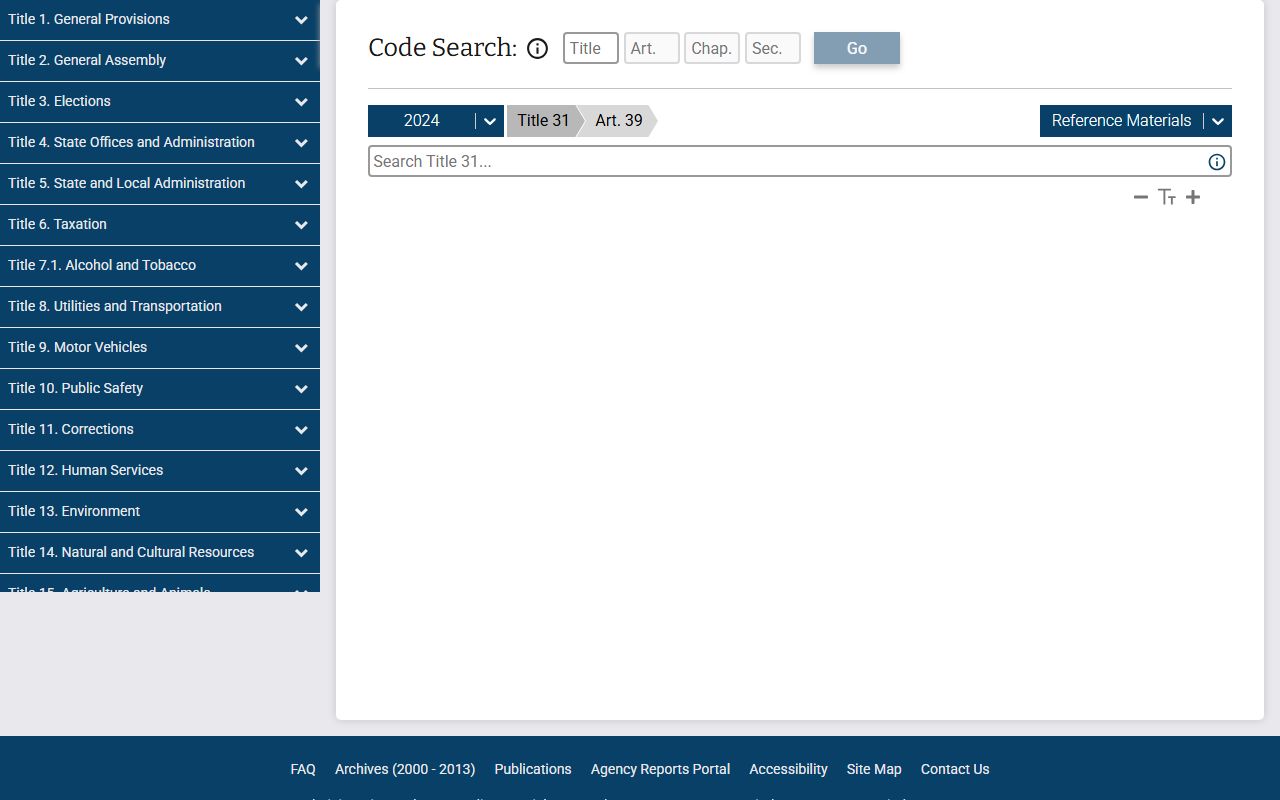
That restriction explains why some arrest-to-charge records cannot be confirmed through phone, email, or a public case search.
Note: No official broad Marion County public active-warrant or mugshot database was documented in the assigned research.
Prosecutor and Defense Contacts
The Marion County Prosecutor's Office is at 251 E. Ohio St., Indianapolis, IN 46204, with phone 317-327-3522 and MCPO@indy.gov. The office decides what criminal charges to file after arrest and also handles traffic services, diversion programs, problem-solving court pathways, and Conviction Integrity Unit work. The Marion County Public Defender Agency is at 3115 Southeastern Avenue, Suite 300, Indianapolis, IN 46203, with phone 317-327-4100 and MCPDA@indy.gov.
These offices are not general record-copy counters. Use them when the question concerns prosecution, appointed defense, diversion, or post-conviction review. Use MyCase and the Clerk when the question is what the public court record shows.