
Marion County Probate Venue
Marion County does not use a separate Surrogate's Court or Orphans' Court. Probate matters are part of the Marion Superior Court civil/probate structure, with local filing and copy support through the Marion County Clerk's Probate Department. The official civil filing page says the Civil Division handles general civil, juvenile, probate, environmental, and domestic relations matters, so a probate case may share access paths with other civil and family case records.
The Clerk division page places the Probate Department at the Community Justice Campus and lists the same public civil filing phone used for several court filing questions. The Clerk also keeps a downtown records presence, which matters when a researcher needs public terminals or paper copies rather than only online case status.
Probate Department / Probate Division
Community Justice Campus
675 Justice Way
Indianapolis, IN 46203
317-327-4740
8 a.m. to 4:30 p.m., Monday through Friday
Clerk Records Counter
City-County Building, Room W122
200 E. Washington St.
Indianapolis, IN 46204
317-327-4740
8 a.m. to 4:30 p.m., Monday through Friday
Marion County Probate Terms
Probate words can be dense, but each one points to a role or paper in the file. These terms help decode Marion County probate records, MyCase entries, and Clerk copy requests.
- Testator
- The person who made a will before death.
- Executor
- The person named in a will to carry out the will and manage estate duties after appointment.
- Intestate
- A death without a valid will, which can lead to an administration case.
- Guardianship
- A case asking the court to appoint someone to act for a minor or protected person.
- Conservatorship
- A term often used for property or financial control for a protected person; Indiana probate records may also use guardianship wording.
- Letters
- The court paper showing a personal representative or administrator has authority to act for an estate.
Search Marion County Probate Records
Public probate status is searched through Indiana MyCase when the case is public and in the statewide case system. The local civil filing page gives a Marion-specific path: choose Marion County-Traffic/Downtown Civil Courts in the location field and use Civil, Family & Probate Case Records. That filter matters because probate is grouped with civil and family case status rather than a county-named probate court database.
- Open MyCase and search by case number if the estate or guardianship cause number is known.
- For a name search, use the decedent, petitioner, guardian, protected person, or other interested party name.
- Select Marion County-Traffic/Downtown Civil Courts as the location when filtering civil, family, and probate results.
- Review public case status, hearing dates, orders, and linked documents where the system provides them.
- If a needed document is not linked, use the Clerk record request portal, public terminals, mail request process, or an in-person counter.
| Field Label | Type | Use | Marion County Notes |
|---|---|---|---|
| Case number | Text | Optional | Use if known; Marion cause numbers may include 49Dxx with a civil or probate case type. |
| Name | Text | Optional | Search decedent, petitioner, guardian, protected person, or interested party names. |
| Location | Dropdown | Recommended | Select Marion County-Traffic/Downtown Civil Courts. |
| Category | Tab or category | Recommended | Use Civil, Family & Probate Case Records. |
| Status | Dropdown | Optional | MyCase exposes All, Open, and Closed options. |
| Sort | Dropdown | Optional | Sort by case number, file date, case style, or status date. |
The official estate administrator filing page is the source for Marion County estate-administration access and will-deposit details.
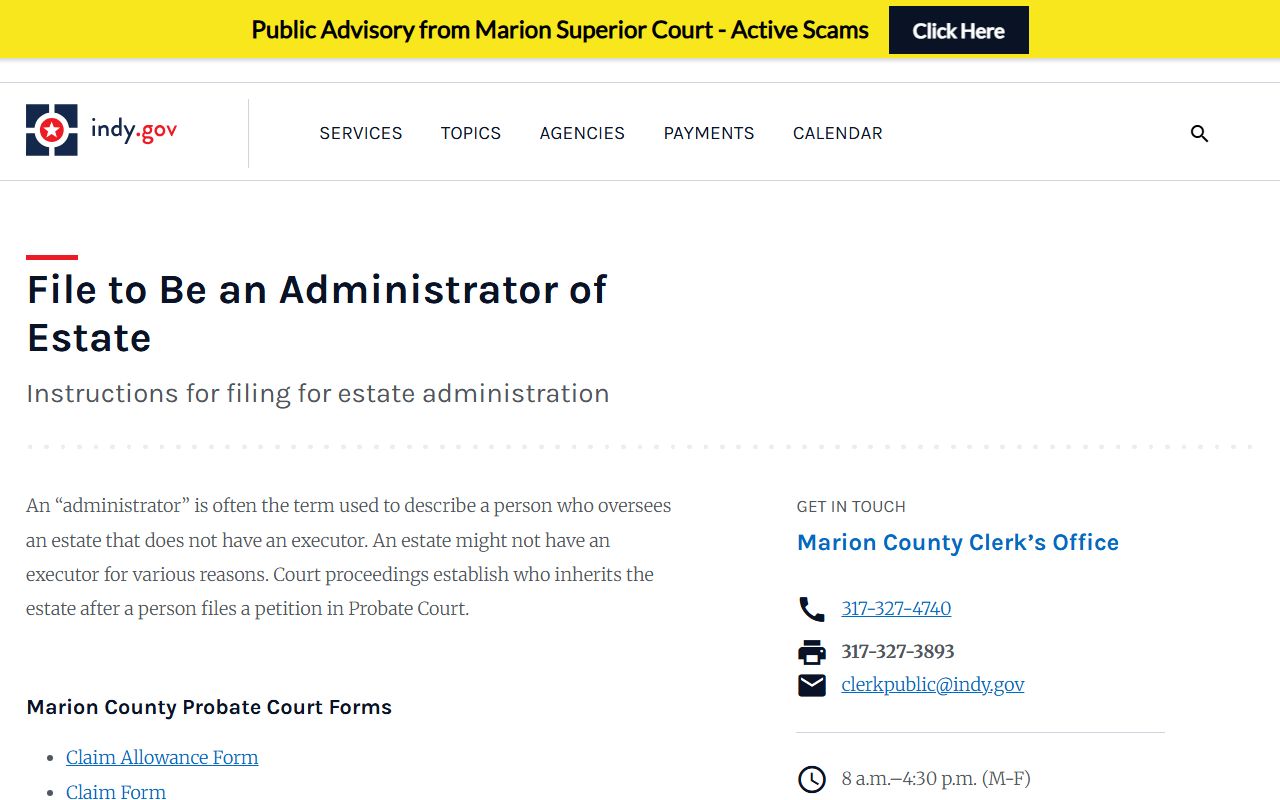
That filing path is important when a person needs to open an estate or confirm where estate administration starts, rather than only search an existing case.
Marion County Probate Access Channels
Probate access in Marion County is not one channel. MyCase may show public status and some linked documents. The Clerk handles copy and certification requests when online documents are missing or an official seal is needed. Public terminals in Room W122 can help a person search from the downtown Clerk records area, while the Community Justice Campus supports probate and civil filing questions.
The Clerk online portal can be used for court records, including civil case files, judgments, orders, divorce decrees, criminal files, marriage records, and other official court documents. For probate, the best request is specific: include the case number if known, the estate or party names, the document needed, and whether the copy must be certified. Mail is also an option through the general court-record request process when a probate-specific form is not posted.
| Channel | Best Use | Limit |
|---|---|---|
| MyCase | Public case status, hearings, orders, and linked documents | Not all public documents are online. |
| Clerk online request | Copies or certified copies from court files | Payment details may follow after the request is reviewed. |
| Community Justice Campus | Probate filing and civil/probate counter questions | Use the court notice if it gives a different location. |
| City-County Building Room W122 | Public terminals and copy requests | Juvenile or restricted files require proper access. |
| Mail request | Copy requests when online submission is not practical | Use enough identifiers for staff to find the file. |
The official civil filing division page identifies probate as part of the Marion Superior Court civil filing work.
That civil filing context explains why a probate search uses civil and family filters rather than a standalone local probate portal.
Marion County Probate Copy Fees
The research did not locate an official Marion County probate filing fee schedule, small-estate threshold instruction set, full probate forms list, or exact administrator petition field inventory in accessible official text. The fee table below is limited to the Clerk copy and certification fees that the official record-copy page supports. Probate filing fees should be verified with the Clerk before filing.
| Item | Amount or Rule |
|---|---|
| Physical copies | $1 per page |
| Certification | $3 regardless of page count |
| Payment methods | Cash, money order, cashier's check, credit card, or debit card |
| Credit or debit card | Nominal card fee may apply |
| Personal checks | Not accepted |
| Mail requests | Clerk reaches out for payment after receiving the request |
Note: No official probate filing-fee grid was found in the research, so only verified copy and certification fees are listed.
What Marion County Probate Records Show
Marion County probate records may include estates, wills, administrations, guardianships, trust-related filings when opened as a court matter, inventories, accountings, orders, letters of administration or authority, claims, creditor notices, and final distributions. A single estate file can move from a petition to orders, notices, asset lists, claims, and final accounting. A guardianship file may show appointment and reporting activity but may also contain data that is not open to the public.
One local detail is will deposit before death. The estate-administrator page states that a person may deposit a will with the Marion County Clerk's Office before death, and the deposit may be made at either the City-County Building or the Community Justice Campus. That is distinct from opening estate administration after a death and should not be confused with proof that a probate case has already been filed.
The U.S. Bankruptcy Court for the Southern District of Indiana is separate from Marion County probate records.
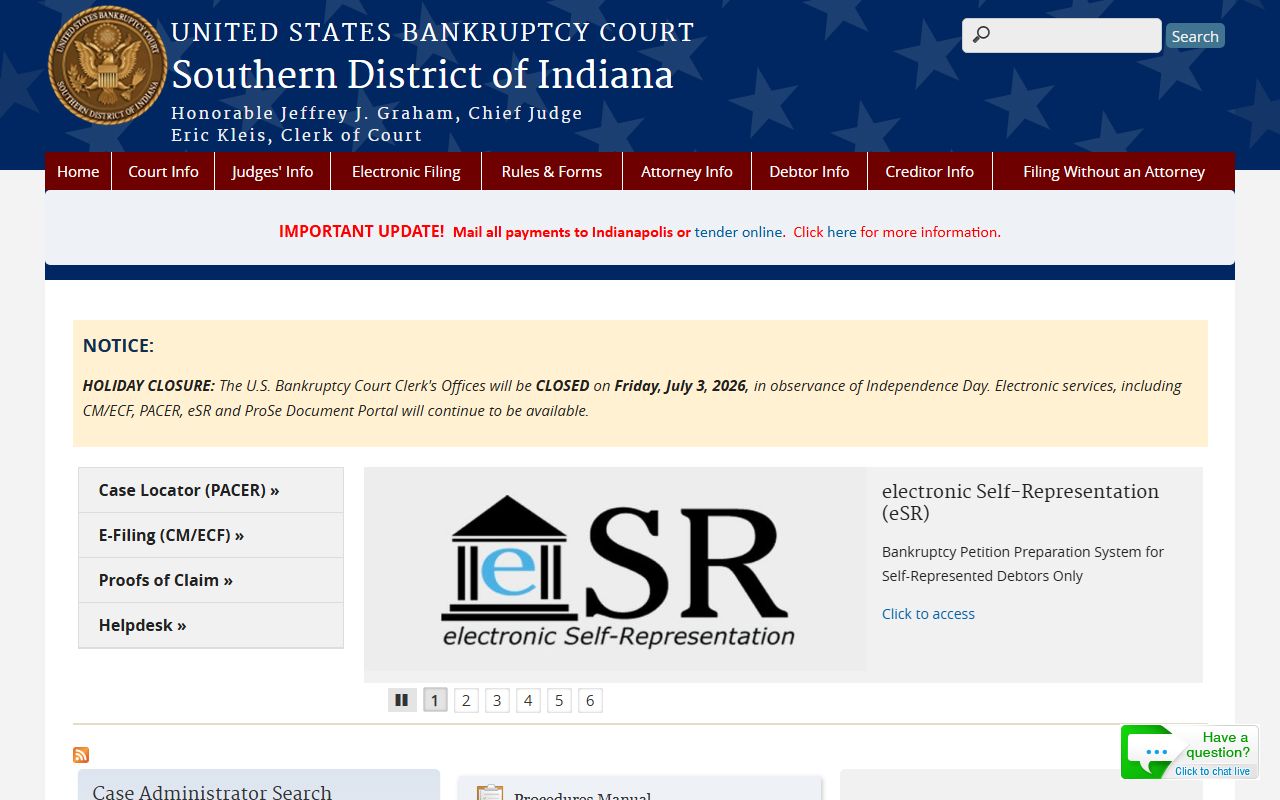
Bankruptcy files are federal records, so a debt case belongs in federal bankruptcy systems rather than the Marion Superior Court probate file.
Restricted Marion County Probate Records
Probate files can be public in part and restricted in part. Indiana access rules exclude or redact confidential personal identifiers, some financial data, medical details, minor information, and sealed material. Guardianship matters can involve protected persons, medical records, or financial reports, so a public docket may not mean every document is available online or over the counter.
Juvenile access limits also matter when a probate-related guardianship touches a minor. The Clerk's record-copy rules say a requester must be a party of record and present valid identification to view juvenile files, and no pending-action, motion, payment, fee, or restitution information is released by phone, mail, or email for juvenile records. If a record is missing from MyCase, that absence may reflect access limits rather than a missing case.
For federal debt matters, use bankruptcy systems. The bankruptcy CM/ECF live system serves the Southern District of Indiana and is not a county probate search.
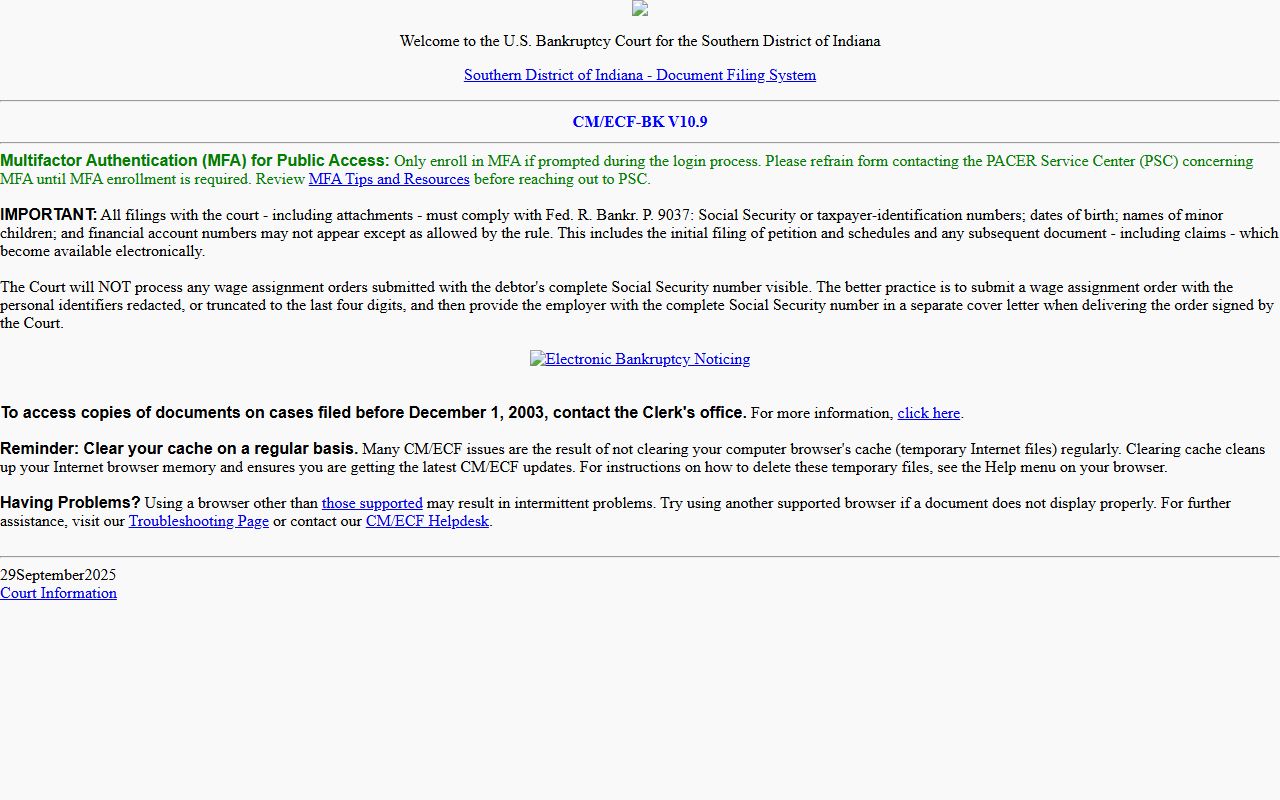
This distinction helps keep estate administration, guardianship, and will records separate from federal bankruptcy docket access.